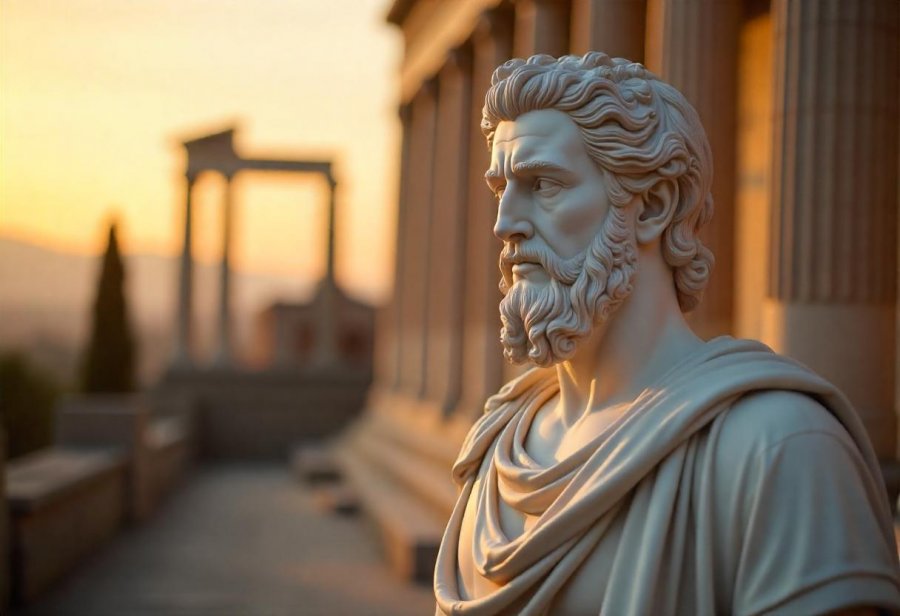
Friedrich Nietzsche’s fierce rebellion against societal norms and his radical ideas on individualism continue to challenge and inspire us today. His philosophy questions deeply held beliefs about morality, authority, and the self, urging us to look inward and redefine our values. Could embracing chaos and uncertainty be the key to authentic self-creation? Nietzsche’s concepts like the “will to power” and the “Übermensch” serve as provocative blueprints for living boldly and independently in a world riddled with conformity. His critique of inherited morals opens space for personal empowerment, fostering resilience amid upheaval. But does unrestrained individualism risk fragmentation? His ongoing influence extends beyond philosophy into art, culture, and psychology, urging us to see setbacks as opportunities for growth. Living out his rebellious spirit demands continuous questioning and self-overcoming—transforming chaos into a catalyst for genuine authenticity and a more vibrant, self-aware society.
Unveiling Nietzsche: Catalyst of Modern Thought and Inner Rebellion
Friedrich Nietzsche remains one of the most provocative and influential figures in modern philosophy. His work pushes us to question deeply held beliefs about morality, authority, and the self, encouraging a shift away from accepting societal norms at face value. Instead, Nietzsche invites us to look inward, challenging us to reevaluate what we consider true or valuable. This rebellious spirit has made his ideas a catalyst for discussions on authenticity, individual freedom, and self-creation—concepts that continue to resonate in today’s culture.
His influence extends far beyond philosophy. Artists, writers, psychologists, and cultural critics draw on his concepts like the “will to power” and the “Übermensch” to challenge conventions and inspire new ways of thinking about identity and purpose. Nietzsche’s critique of traditional morality laid the groundwork for embracing personal authenticity and forging a life rooted in self-determination. His ideas encourage us to see ourselves as active participants in shaping our lives, not passive followers of inherited rules.
Born in 1844 in Röcken, Germany, Nietzsche’s early life was marked by tragedy and rebellion. Raised in a religious environment by a mother and sister who upheld strict Christian values, he experienced the loss of his father at a young age. Rejecting the religious dogmas of his upbringing, he developed a philosophical voice that questioned authority and sought to redefine human potential. His own journey of self-assertion mirrors the core themes of his work—resisting conformity and cultivating inner strength.
Understanding Nietzsche’s significance involves recognizing his role as a critic of the cultural and moral status quo. His ideas challenged the Enlightenment’s optimism and the authority of religious and political institutions. During a time of societal upheaval, his call to embrace chaos and self-overcoming offered a revolutionary alternative—an invitation to find meaning amid upheaval. Today, his legacy continues to inspire those who believe in the power of individual agency to reshape society and redefine what it means to live authentically.
Core Concepts that Challenge: Nihilism, Will to Power, and the Übermensch
To truly grasp Nietzsche’s revolutionary ideas, it’s essential to understand some of the core concepts he introduced—ideas that challenge our usual ways of thinking and serve as the foundation for his critique of morality and society. Nihilism, for instance, describes the decline of traditional values, especially those rooted in religion and morality. Nietzsche saw this not just as a crisis but as an opportunity—a moment for individuals to reevaluate and craft their own meanings outside inherited frameworks.
Another fundamental idea is the “will to power,” which moves beyond the basic instinct for survival. Nietzsche believed humans are driven by an innate desire to assert influence and strength—to shape themselves and their environment according to their inner drive. This concept emphasizes that self-assertion and creative force are at the core of human nature, urging us to transcend limitations and actively redefine our identities.
Building on that is the notion of the Übermensch, or “overman.” Nietzsche envisioned this figure as someone who has transcended societal norms and conventional morality, creating their own values and living authentically. The Übermensch embodies self-mastery and the power of self-creation, taking full responsibility for defining their purpose without relying on external authorities. This ideal encourages us to embrace our individuality and take charge of our lives.
These ideas are interconnected, forming a critique of how morality and authority often suppress human vitality. Nietzsche’s call to challenge inherited beliefs and pursue self-overcoming aims to inspire a life driven by personal strength and authenticity. Recognizing these concepts reveals how his philosophy urges us to question everything—from societal standards to our deepest assumptions—in the pursuit of genuine freedom.
Understanding these foundational notions helps us see why Nietzsche’s philosophy remains relevant today. They serve as tools for questioning the norms that shape us and for crafting a life rooted in our own values. This mindset of self-creation and rebellion underpins much of his influence, offering a blueprint for living more consciously and authentically amid modern chaos.
Legacy Unbound: How Nietzsche Continues to Shape Culture, Morality, and Self-Identity
Nietzsche’s ideas have left an indelible mark on modern thought and culture, continually shaping how we view ourselves and our society. His challenge to traditional morality opened space for a broader appreciation of authenticity and self-creation as vital values. Today’s movements advocating personal empowerment and the rejection of societal constraints draw heavily from his philosophy, inspiring individuals to craft lives rooted in their own sense of purpose. Writers, artists, and thinkers often reference concepts like the “will to power” or the “Übermensch” to explore themes of strength, independence, and self-determination.
His critique of inherited morals has also fostered a more inclusive and diverse understanding of human experience. By questioning long-standing beliefs, Nietzsche paved the way for people to develop their own morals and narratives based on personal insight rather than tradition. This shift has influenced psychology, politics, and education, emphasizing that individuals can actively shape their identities and societal roles. It promotes a culture that celebrates uniqueness over conformity, encouraging us to see moral boundaries as opportunities for growth rather than restrictions.
In the arts and media, Nietzsche’s influence is evident in the rejection of conventional storytelling and moral frameworks. Many avant-garde movements challenge traditional norms, embodying his call to question authority and live authentically. Social media platforms amplify these themes by enabling individuals to express themselves freely and forge distinct identities. These cultural shifts reflect his impact, fostering environments where originality and depth are valued over surface appearances and accepted standards.
His ideas also reshape how we think about freedom and self-identity today. Nietzsche’s rejection of fixed moral absolutes supports a fluid, subjective approach to values—empowering people to define morality on their own terms. This perspective nurtures a more tolerant and open-minded society, where diverse ways of living and thinking are embraced without fear of judgment. It invites us to view moral boundaries not as limitations but as spaces for exploration and personal evolution.
However, Nietzsche’s emphasis on radical individualism has sparked debate. Critics warn that unrestrained self-assertion could lead to moral relativism or societal fragmentation. Yet many interpret his philosophy as an encouragement for ongoing self-overcoming—an unending process of questioning, redefining, and growing. His focus on inner strength and authenticity continues to inspire resilience amid societal upheaval, offering tools to navigate chaos without losing sight of personal purpose.
Overall, Nietzsche’s influence remains woven into the fabric of contemporary culture, inspiring continual conversations about authenticity, strength, and freedom. His ideas challenge us to see upheaval as a necessary step in personal and societal evolution. By questioning inherited norms and embracing our inner power, his legacy pushes us toward a future where genuine individuality can flourish amid chaos, fostering a more vibrant and self-aware world.
Living Nietzsche: Practical Steps to Embrace Rebellion and Authenticity
Living out Nietzsche’s rebellious spirit starts with questioning the norms and expectations that often influence our choices without us noticing. Rather than passively accepting societal standards, take a moment to reflect: do your career, relationships, or habits truly resonate with your authentic self, or are they simply outcomes of conformity? Making conscious decisions based on your values lays the foundation for independence and a life built around genuine self-awareness.
Critical thinking is essential. Challenge authority figures, cultural norms, and inherited beliefs—don’t accept ideas just because they’re widely accepted or tradition-bound. Investigate their origins and relevance to your life. This habit sharpens your sense of personal truth and builds resilience, empowering you to stand firm in your convictions and carve out your own path.
Authentic engagement with others reinforces this rebellious mindset. Share your ideas openly and foster conversations that challenge the status quo. Whether at work, in your community, or online, creating environments that value diverse perspectives encourages growth and sparks innovation. Supporting art, lifestyle choices, and dialogues that defy convention aligns with Nietzsche’s call to live boldly and independently.
Embracing chaos and uncertainty is another key step. Instead of fearing setbacks, see failures and disruptions as opportunities to learn and evolve. When faced with adversity, ask what it reveals about your values and strengths. This approach transforms obstacles into catalysts for self-overcoming, pushing you to redefine yourself repeatedly and deepen your inner resilience.
Small acts of self-assertion—such as making choices driven by your judgment rather than external approval—strengthen this Nietzschean approach. Pursue passions that resonate with your core identity, even if they challenge norms or seem unconventional. These deliberate choices reinforce your inner independence and cultivate resilience, creating ripple effects that influence other areas of your life.
Living Nietzsche’s ideas isn’t a one-time act but an ongoing practice. Continuously reevaluate your beliefs, push beyond comfort zones, and redefine success on your own terms. Small, consistent efforts to challenge conformity and craft your unique path lead to profound personal growth, honoring his legacy of radical authenticity and creative independence.
Beyond the Present: Embracing Chaos, Growth, and the Infinite Journey of Self-Overcoming
Nietzsche’s ideas continue to challenge and inspire us long after his time, urging a rejection of complacency and encouraging us to see chaos as a catalyst for growth. In today’s world, where external pressures and inherited beliefs often shape our identity and success, his philosophy reminds us that true authenticity comes from breaking free and forging our own path. Embracing uncertainty and upheaval isn’t a sign of weakness; it’s a vital step toward discovering a stronger, more genuine self.
His emphasis on self-overcoming shows that setbacks, failures, and disruptions are not just obstacles but opportunities for transformation. Nietzsche believed that true strength lies in pushing beyond our limits, reshaping ourselves through every challenge rather than avoiding it. This mindset turns adversity into fuel for growth, fostering resilience and inner independence—qualities essential for navigating the complexities of modern life.
Looking ahead, engaging with Nietzsche’s philosophy offers a powerful guide for personal freedom and cultural renewal. His call to question long-held beliefs and societal norms creates space for innovative ways of thinking and living. Staying curious and committed to ongoing self-reassessment keeps his rebellious spirit alive, inspiring continual growth both within ourselves and in the communities we influence. It’s a reminder that transformation is an endless journey rooted in self-discovery.
Living Nietzschean principles isn’t about reckless rebellion; it’s about deliberate self-creation. It involves a continuous process of questioning, redefining, and rebuilding—small acts of authenticity that accumulate into a life truly aligned with your core values. Pursuing passions that challenge conventions, embracing chaos, and daring to live differently all contribute to a sense of purpose and inner strength. These efforts resonate beyond the individual, helping foster a culture that values depth, originality, and genuine expression.
His ideas extend beyond personal growth, shaping the fabric of society itself. Art, media, and social movements increasingly reflect his emphasis on authenticity and the rejection of conformity. By supporting these cultural shifts, we reinforce the importance of living boldly and questioning norms. This ongoing dialogue about freedom and self-identity creates environments where diversity of thought and genuine self-expression can flourish, enriching our collective human experience.
Nietzsche’s legacy is a call to view the pursuit of authenticity and strength as an ongoing process. It’s a continuous dialogue with ourselves and the world—an adventure of questioning, growth, and reinvention. As we face an uncertain future, his philosophy encourages us to see chaos not as a threat but as an essential part of becoming our true selves. Living boldly and creatively amidst upheaval isn’t just a challenge; it’s the pathway to a more resilient, authentic life.