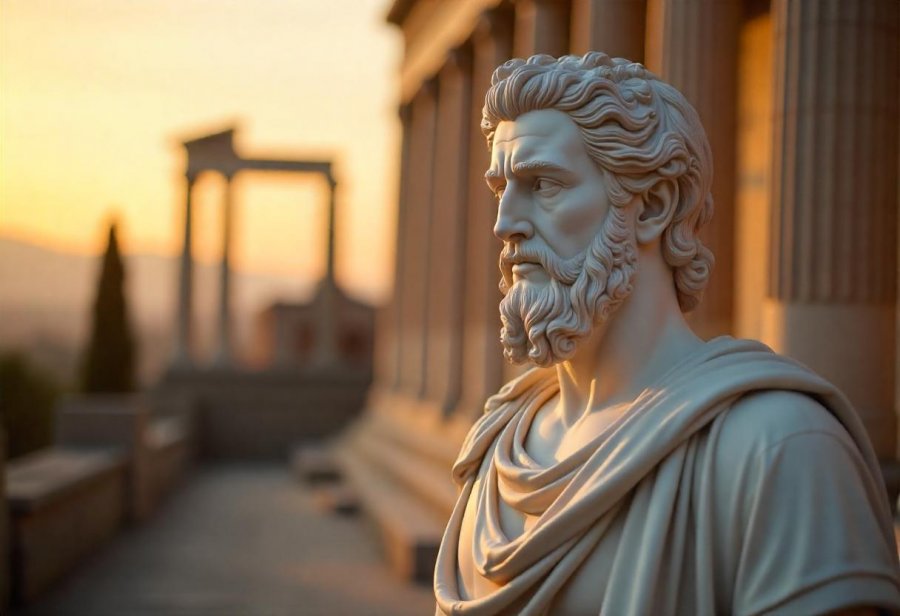
Isaac Newton’s story begins with simple curiosity—a young boy captivated by the world around him, asking questions about why objects fall and how planets stay in motion. This insatiable inquisitiveness propelled him to challenge existing beliefs and uncover universal laws that underpin our universe. His groundbreaking theories, rooted in observation and mathematical reasoning, transformed our understanding of gravity, motion, and light. But what if profound discoveries start with a basic question—like why an apple falls? Newton’s relentless pursuit of answers exemplifies how curiosity can lead to revolutionary science that still influences modern physics. Today, his legacy reminds us that inquiry isn’t just for geniuses; it’s a universal trait that fuels innovation and exploration. From simple experiments with household objects to complex theories, embracing curiosity can unlock mysteries and inspire breakthroughs, echoing Newton’s timeless pursuit of understanding the cosmos.
Curiosity Sparks Newton’s Journey from Childhood Wonder to Scientific Revolution
Isaac Newton’s story begins not with complex formulas or groundbreaking theories, but with simple curiosity. As a young boy in Woolsthorpe, England, he was captivated by the world around him—tinkering with objects, observing nature, and asking questions that many might overlook. This early inquisitiveness laid the groundwork for a lifelong pursuit of understanding the universe’s deepest secrets.
Newton’s childhood fascination grew stronger as he moved into formal education. At Cambridge University, he encountered the revolutionary ideas of scientists like Galileo and Kepler. Their work challenged existing beliefs about motion and planetary orbits, inspiring Newton to think critically and question the status quo. These early influences fueled his desire to uncover the underlying principles governing natural phenomena.
One story that captures his curiosity is the famous falling apple. Whether entirely factual or more symbolic, it reflects Newton’s fascination with gravity. He wondered what caused objects to fall and whether a force at a distance might be responsible. This question about unseen forces eventually led him to formulate the law of universal gravitation, transforming our understanding of the cosmos.
Newton’s approach to science was rooted in a belief that nature operates according to universal laws waiting to be discovered. He sought order in chaos through careful observation and mathematical reasoning. Instead of merely collecting facts, he looked for patterns and relationships that could explain how things work, pushing him to develop new tools and experiments.
What set Newton apart wasn’t just his brilliance but his relentless curiosity. Every question he asked and every pattern he uncovered brought him closer to revealing the fundamental laws of motion, gravity, and light. His deep desire to see beyond surface explanations turned childhood wonder into revolutionary science, forever changing how we understand the universe.
Newton’s beginnings remind us that curiosity isn’t reserved for geniuses alone. It’s a trait anyone can nurture, starting with simple questions like why apples fall or how planets stay in orbit. His story shows that big ideas often emerge from these small inquiries—proof that curiosity, paired with persistence, can lead to discoveries that reshape our world.
Foundations of Genius: How Early Influences Shaped Newton’s Quest for Universal Laws
Isaac Newton’s journey into the heart of science was shaped early on by a mix of influences and a natural curiosity that set him apart. Born in 1643 in Woolsthorpe, England, he grew up in modest surroundings, but his inquisitive nature was evident from a young age. Whether tinkering with household objects or observing the world around him, Newton’s questions about how things worked fueled his desire to understand the universe’s underlying principles.
His education played a pivotal role in nurturing this curiosity. At Cambridge University, he encountered the revolutionary ideas of thinkers like Galileo and Kepler. These scientists challenged existing beliefs about motion and planetary behavior, inspiring Newton to explore these concepts further. Their work pushed him to think critically, question assumptions, and seek deeper understanding. This foundation of inquiry became the bedrock for his later breakthroughs.
A defining moment came from the simple story—the falling apple. While the details may be more symbolic than literal, it captured Newton’s fascination with gravity. He wondered what caused objects to fall and whether an unseen force might be responsible. This curiosity about invisible forces evolved into his law of universal gravitation, fundamentally transforming how we view the cosmos and our place within it.
Newton’s early years were driven by a belief that nature was governed by universal laws waiting to be uncovered. He approached the natural world with a mindset that combined careful observation with mathematical reasoning. Instead of merely cataloging facts, he sought patterns and relationships—clues that could unlock the secrets of motion, light, and matter. This analytical approach set him apart as a scientist willing to look beyond surface phenomena.
His questions grew more complex over time, shifting from simple observations to inquiries about the fundamental laws behind motion and gravity. Each discovery was fueled by an insatiable curiosity, pushing him to develop new tools and methods. His relentless drive to decode the universe’s mysteries was rooted in a desire to find order amid chaos and to uncover the universal principles that govern everything.
What made Newton’s curiosity so powerful was its deliberate nature. It wasn’t just a childhood trait but a conscious approach, one that he cultivated throughout his life. His early influences—both personal experiences and the pioneering work of others—created a fertile environment for innovation. This mindset of questioning and exploration became the foundation for his revolutionary scientific approach.
Newton’s story reminds us that curiosity isn’t limited to geniuses or scientists. It’s a universal trait that anyone can develop. His journey shows that big ideas often start with simple questions—why do apples fall? How do planets stay in orbit? These questions, paired with persistence and critical thinking, can lead to discoveries that forever change our understanding of the universe.
Newton’s Enduring Legacy: How His Insights Continue to Drive Modern Science
Today, Isaac Newton’s work remains a cornerstone of scientific understanding, shaping our exploration of the universe and fueling ongoing discovery. His laws of motion and the law of universal gravitation form the foundation of physics education and practical engineering alike. Even with advancements like Einstein’s relativity and quantum mechanics, Newton’s principles continue to be vital tools, demonstrating their enduring relevance in everyday life and technological progress.
Newton’s legacy today extends beyond his formulas; it embodies a mindset of relentless curiosity and critical inquiry. Modern scientists and students alike are inspired by his example to ask deeper questions about natural phenomena. Many contemporary breakthroughs in science and technology build on Newtonian ideas, often starting with a simple curiosity that leads to profound insights. This culture of questioning and exploration keeps scientific progress alive and dynamic.
While some of Newton’s theories have been refined or challenged, they remain remarkably robust in describing everyday physics. Einstein’s theories, for example, expanded our understanding under extreme conditions, like near black holes or at very high velocities. Yet, Newton’s laws still reliably govern most practical applications—engineering, space travel, and robotics—showing how revolutionary ideas can adapt while retaining their core value. This evolution highlights that curiosity-driven questions often lead to lasting scientific frameworks.
The debates surrounding Newton’s methods or discoveries—such as the origins of calculus or his personal rivalries—add nuance but do not diminish his contributions. These discussions remind us that science is a human endeavor, shaped by context, interpretation, and sometimes controversy. Recognizing this complexity enriches our appreciation of his work, emphasizing that curiosity and perseverance drive scientific progress despite imperfections or disagreements.
In popular culture, Newton is often portrayed as the quintessential scientist—brilliant, eccentric, and endlessly curious. Films, books, and documentaries celebrate his relentless pursuit of truth, making him a symbol of innovation and inquiry. His image inspires generations to question, explore, and push beyond current limits, reinforcing that curiosity remains at the heart of all scientific advancement.
The continued relevance of Newton’s work underscores the importance of curiosity as a universal trait. His questions about motion, gravity, and light weren’t just about solving specific problems—they opened doors to understanding the universe’s fundamental laws. His curiosity motivated him to develop theories that still underpin modern science, proving that asking the right questions can lead to revolutionary insights.
Today’s scientific landscape, from space exploration to quantum physics, is built on a foundation of inquisitiveness. Newton’s legacy reminds us that curiosity isn’t exclusive to scientists; it’s a vital part of human nature. By nurturing that innate desire to understand, we keep the spirit of discovery alive and open new horizons for future breakthroughs.
Explore and Discover: Practical Ways to Embody Newton’s Curiosity in Everyday Life
Getting hands-on with Newton’s principles is a powerful way to bring curiosity to life and deepen your understanding of how the universe works. You don’t need fancy equipment—simple household items can be enough to explore motion, force, and gravity. For instance, try rolling different objects—balls, toy cars, or even water bottles—down a ramp. Observe how some objects slide faster or slower, then ask yourself why. Changing the angle of the ramp or the weight of the objects can reveal clues about acceleration, friction, and the forces at play, sparking questions and curiosity.
Experimenting with “what if” scenarios keeps the process engaging. Increase the ramp’s angle and see if the object speeds up. Swap out different masses and notice how they behave. These small tests help you get a tangible feel for Newton’s laws in action, making abstract concepts more concrete. The key is to stay curious, observe carefully, and look for patterns or surprises that challenge your assumptions. Each experiment becomes a stepping stone toward a deeper grasp of motion and gravity.
You can also explore falling objects by dropping different items from the same height. Surprisingly, they often land at the same time—even if one is heavier—challenging common beliefs about weight and fall speed. This simple activity introduces you to Newton’s insight that, in a vacuum, all objects accelerate equally under gravity. It’s a straightforward way to question misconceptions and develop critical thinking about natural laws. Sometimes, the most basic experiments reveal the most profound truths.
Digital tools and online simulations can elevate your curiosity further. Interactive platforms allow you to manipulate variables like mass, force, or angles, visually demonstrating how different factors influence motion. Engaging with these virtual experiments makes complex ideas more accessible and memorable, fostering an active learning process. They encourage you to experiment repeatedly, learning from each variation and refining your understanding—just as Newton did in his own investigations.
Make these activities a regular habit, whether during a lunch break or over the weekend. Simple experiments keep your mind active and eager to explore, reinforcing Newton’s principles through direct experience. Each small step, from rolling objects to adjusting simulations, builds confidence and sparks new questions. More importantly, it cultivates a mindset of curiosity that fuels discovery, turning everyday moments into opportunities for learning. By staying curious and experimenting freely, you mirror Newton’s approach—discovering insights that can transform your understanding of the universe.
Cultivating Curiosity: Newton’s Lesson on the Power of Questions for Future Breakthroughs
Curiosity has always driven scientific progress, and Isaac Newton’s relentless questioning exemplifies this perfectly. His curiosity about motion, gravity, and light wasn’t just about solving specific puzzles; it was about uncovering the fundamental principles that shape our universe. Newton’s willingness to ask “why” and “how” sparked discoveries that remain at the core of science today, proving that asking the right questions can lead to revolutionary breakthroughs.
What makes Newton’s story inspiring is that curiosity isn’t limited to geniuses or scientists—it’s a trait everyone can nurture. His journey shows that even simple questions, like why apples fall or how planets stay in orbit, can ignite ideas that alter our understanding of the world. By staying curious and persistent, we participate in a tradition of exploration that pushes humanity forward, one question at a time.
Encouraging curiosity is about more than just making new discoveries. It’s a mindset—an approach to life that keeps learning vibrant and ongoing. Newton’s example reminds us that science isn’t confined to laboratories or academic settings; it’s a way of viewing the world with wonder, asking “what if” and “why not.” This outlook fuels innovation, resilience, and the continuous pursuit of knowledge, even when answers aren’t immediately clear.
Today’s scientific advances, from space exploration to quantum physics, often begin with simple questions—questions that anyone can ask. Newton’s legacy shows us that curiosity is a universal tool, one that can help us navigate complex challenges and explore new possibilities. By cultivating that same inquisitiveness, we keep the spirit of discovery alive and open paths to future breakthroughs that we have yet to imagine.
Ultimately, Newton’s story is a testament to the power of curiosity as a driver of progress. His questions and relentless pursuit of understanding remind us that the most profound discoveries often start with a spark of wonder. Embracing that same curiosity in our daily lives can keep the flame of exploration burning bright, inspiring us to seek answers, challenge assumptions, and unlock the mysteries of the universe—just as he did.